


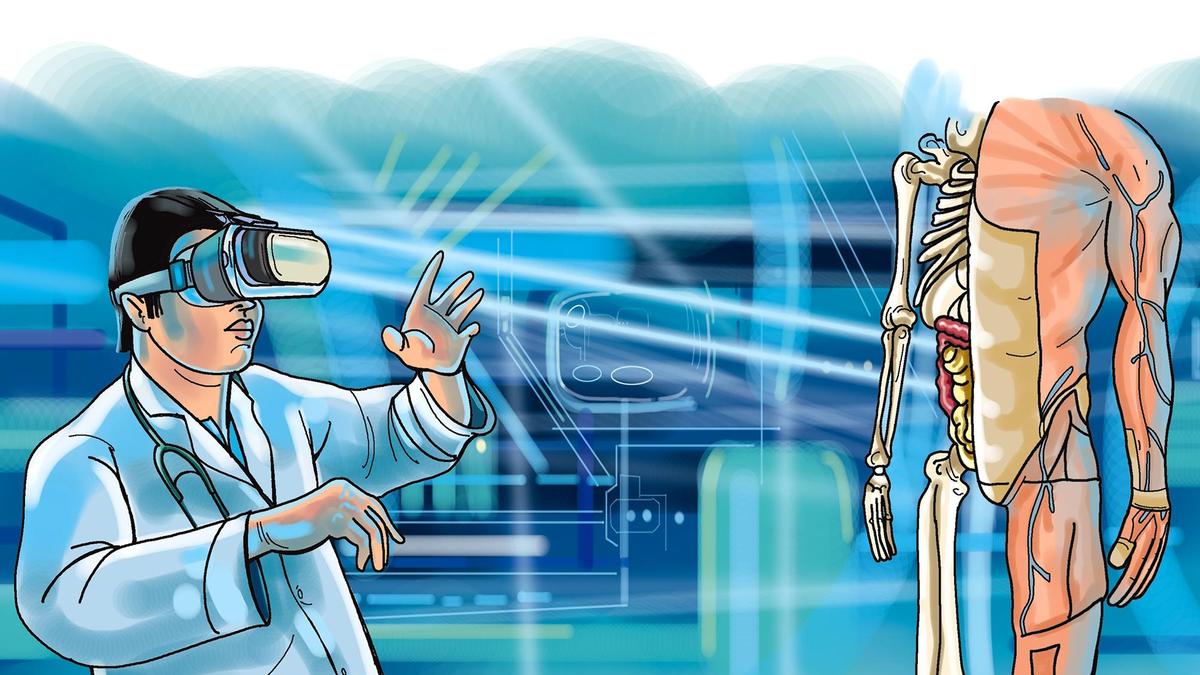
Why India Needs a Cultural Shift to Promote Simulation in Medical Learning
India’s healthcare system faces a hidden crisis, losing thousands of patients each year not to diseases or ailments, but to preventable clinical errors—a reality often overlooked and seldom acknowledged. This issue is not just anecdotal; every doctor encounters it in their practice. Having worked on developing high-fidelity medical simulators and observing training behavior in hospitals, I have witnessed a gradual but notable transformation: healthcare institutions are increasingly embracing structured simulation to address this perilous gap in patient safety.
The Paradox of Preparedness
For decades, India has coexisted with a paradoxical situation. On one hand, we triumph in executing some of the world’s most intricate surgical procedures; on the other hand, we still encounter routine complications that escalate from errors largely disconnected from medical knowledge yet deeply tied to the preparedness of healthcare providers. Many young clinicians, even those who are most passionate about their roles, enter intense environments such as intensive care units and emergency rooms without having practiced high-risk scenarios with simulated experiences. This is not merely an individual fail but a glaring structural flaw in our medical training system.
Traditionally, hospitals have leaned on an apprenticeship-style method of learning—an approach that encourages observation, attempting procedures, and ultimately learning while on the job. However, in critical fields like trauma care, neonatal emergencies, obstetrics, and critical care, “learning on the job” can regrettably equate to “learning on the patient.” It is predictable that such a system would lead to hesitation during the all-important first moments of a crisis, inconsistent procedural application, and breakdowns in communication, all of which reveal the inherent vulnerabilities of a healthcare framework reliant on experience instead of rehearsal.
Moving Toward Simulation
The issue of patient safety can no longer be a matter of mere chance. All across India, clinical leaders are making a decisive pivot toward simulation-based training, a practice that has long been established in aviation and defense sectors and is now increasingly being integrated into Indian medical education and practice. This transition is driven not by a desire for new technology per se, but by an urgent necessity to create standardized responses for high-stakes clinical situations.
In the development of simulation, we increasingly observe how repeated drills effectively alter behaviors; muscle memory can replace the panic experienced in genuine emergencies. For instance, nursing students who practice vital procedures such as catheter insertions, neonatal resuscitation, or airway management on realistic simulators can make errors where they should—inside a controlled lab environment, rather than at the bedside of a patient. Through simulation, errors can emerge, be scrutinized, and rectified—all without causing any harm.
The benefits of simulation training go beyond technical skills acquisition. A significant number of preventable errors originate from miscommunication—misunderstandings about who speaks, who leads, and who anticipates action within the team. Simulation illuminates these interpersonal weaknesses. Teams not only learn how to execute medical procedures, but also how to function seamlessly as a coordinated unit. In bustling emergency departments, this coordination often plays a crucial role in determining whether a patient makes a recovery or faces deterioration.
Nursing Education Transformation
In particular, nursing education stands at the forefront of a profound transformation. Considering that India’s nursing workforce is nearly twelve times the size of the pool of MBBS graduates, this demographic plays a pivotal role in regional and bedside patient care. More nursing colleges are now incorporating structured simulation modules into their training curriculum, allowing students to practice myriad procedures before stepping into clinical rotations. This evolution represents more than just an academic enhancement; it is a fundamental public health investment with tangible outcomes, translating into fewer complications and safer hospital environments.
Healthcare institutions are also reimagining their safety culture. The concept of “zero-complication pathways,” which once appeared as a mere aspiration, is becoming a reality as clinical teams rehearse comprehensive workflows from start to finish. Institutions that had previously accepted complications as unavoidable statistics are now asking critical questions: “Was this event preventable?” and “Could a simulated environment have indicated this risk sooner?”
Scaling Across India
However, the real concern lies in scaling these innovations. Simulation training must not remain a privilege confined to metropolitan areas. Tier 2 and Tier 3 cities, which often face high clinical loads but lack access to structured educational programs, stand to benefit most from these developments. There is a positive trend; numerous medical universities and state health departments are actively exploring options for decentralized simulation labs, mobile training units, and blended learning approaches that merge digital education with hands-on practice.
From a developmental perspective, the field in India has matured considerably. Significant attention towards realism and accessibility is influencing much of the ongoing work, including the creation of simulation models that not only encapsulate anatomical accuracy but also reflect real-life contexts—taking into account resource limitations, high patient loads, and diverse case profiles the healthcare workforce encounters across different regions.
Across the healthcare industry, teams involved in developing simulation materials and realistic anatomical modeling are experiencing an increasing demand from institutions beyond major urban centers. This signals a significant cultural shift; hospitals are now acknowledging that preparedness—rather than mere improvisation—must form the cornerstone of modern clinical training.
A Fundamental Cultural Pivot
Ultimately, the movement toward simulation transcends educational methodology; it represents a cultural shift within the medical community. It recognizes an uncomfortable truth that the system has long resisted: even the most dedicated clinicians can make errors when they are under-prepared, inadequately supported, or poorly trained. To meaningfully reduce preventable harm, we must cultivate humility, uphold accountability, and summon the courage to dismantle outdated practices.
If India aspires to build a healthcare framework where the assurance of safety is treated as a given rather than a hopeful aspiration, integrating rehearsal into standard medical education must become as vital as diagnostic skills. Just as every airline pilot flies hundreds of simulated hours before taking command, every surgical resident, nurse, and emergency physician deserves and increasingly demands the right to practice in simulated scenarios before they are faced with life-or-death situations.
While simulation may not eradicate every error, it plays a pivotal role in preventing the most heart-wrenching mistakes—the easily avoidable mistakes that we already know how to circumvent. In a nation where the normalization of avoidable harm has persisted for far too long, these advancements alone mark a crucial step forward in achieving a safer healthcare environment.


