


Suspect Tracked in Cheating Case Caught Moving ₹4.05 Crore Hawala Money
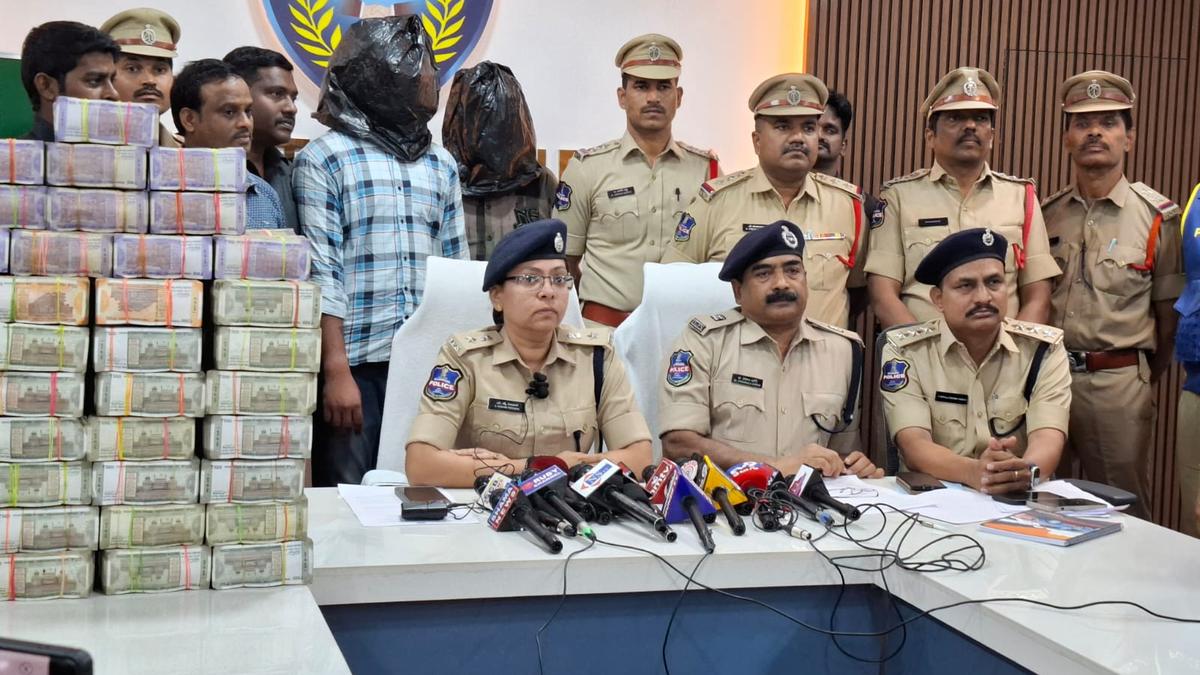
In a significant crackdown on illegal financial operations, the Bowenpally police have arrested two individuals linked to a cheating case that is believed to be part of a larger hawala network. The operation culminated with the recovery of a staggering ₹4.05 crore in unaccounted cash on Thursday.
Details of the Arrest
According to Deputy Commissioner of Police (North), S. Rashmi Perumal, the accused have been identified as Prakash Motibhai Prajapathi, aged 30, and his accomplice Pragnesh Keerthibai Prajapathi, 28, both hailing from Gujarat. The police’s swift action was prompted by a lead regarding Prakash’s movements, which ultimately led to their interception.
The Cheating Complaint
The investigation stems from a formal complaint lodged on December 7, 2024, by a local businessman, V. Vishwanath Chary, who reported that he and two associates had handed over ₹50 lakh to a man named Mohammad Subhan Pasha. This cash was meant for a promised cash-to-RTGS exchange. However, contrary to their expectations, no transfer was made, and the cash was never returned, prompting the victim to approach the police.
Police Interception and Confession
On the day of the arrest, Bowenpally police acted on actionable intelligence and intercepted an SUV bearing a Maharashtra registration plate within the jurisdiction of the Addakal police limits in Mahabubnagar district. Upon searching the vehicle, officers discovered that Prakash was in possession of ₹4.05 crore in hawala cash.
Further interrogation revealed that Prakash admitted to having received the ₹50 lakh back in August 2024. He also confessed that he was transporting the seized amount from Nagpur to Bengaluru as part of an unauthorized hawala transaction, which involves the illegal transfer of money to bypass the formal banking system.
Ongoing Investigation
In light of these developments, the authorities have highlighted that the investigation is still ongoing, with efforts being made to track additional suspects and verify the origins of the confiscated money. The police have assured the public that they are taking stringent measures to disrupt such illegal financial networks operating within the region.
This case exemplifies the continuing battle against hawala operations, which pose a significant challenge to law enforcement due to their clandestine nature, often obscuring the legal movement of money across borders.


