


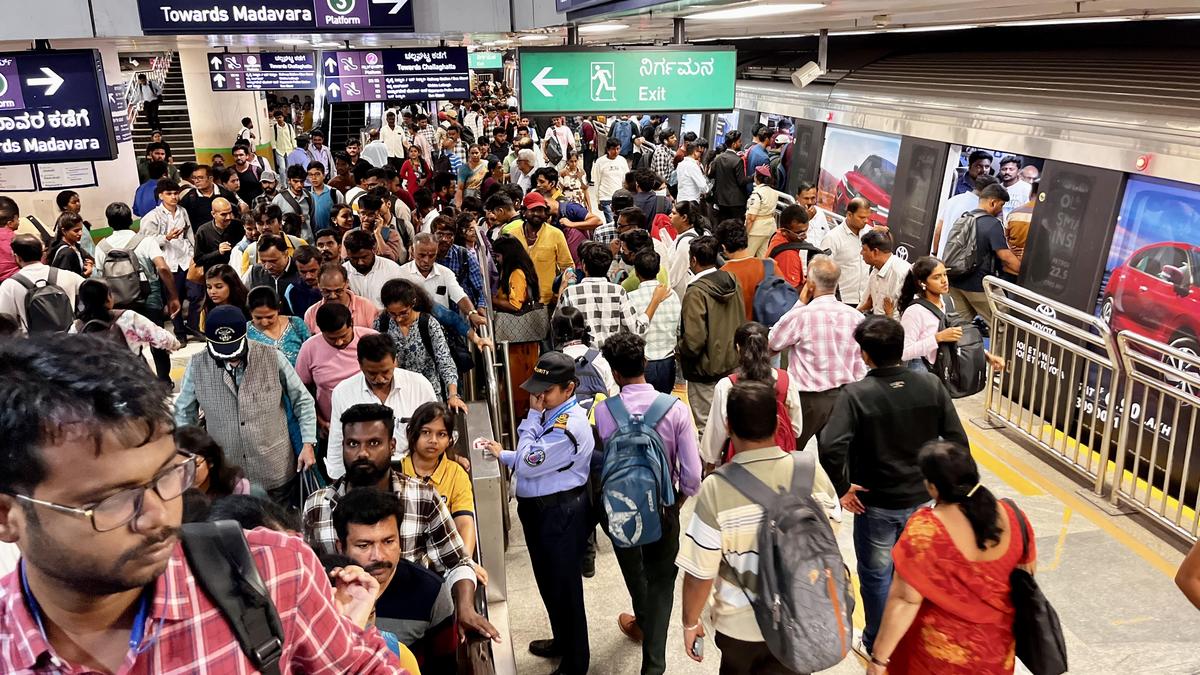
Calls Grow for Platform Screen Doors in Metro Stations
Rollout on Existing Routes Faces Cost and Engineering Setbacks
In the wake of another tragic incident on the metro tracks, the demand for the installation of Platform Screen Doors (PSDs) across all Namma Metro stations in Bengaluru has surged. Commuters assert that these safety features have become an essential part of public transportation systems. However, officials from the Bangalore Metro Rail Corporation Ltd. (BMRCL) underscore that the integration of this technology into the existing metro network poses significant financial and engineering challenges.
The latest fatality occurred on Friday at Kengeri station, where a man reportedly jumped onto the tracks, causing a substantial disruption of services and tragically resulting in his death. This incident has reignited fears surrounding passenger safety, prompting renewed calls for the installation of physical barriers along metro platforms to prevent similar occurrences.
Growing Concerns Among Commuters
Regular users of the metro system, which sees an average daily ridership of approximately 1 million, have emphasized the urgent necessity for improved safety measures. Ramprasad K., a concerned commuter from Rajajinagar, expressed his frustration: “During rush hour, even standing in line feels unsafe like a game of chance. The Bengaluru Metro must implement Platform Screen Doors as a standard feature on all future routes before they are open to the public,” he stated.
Another frequent traveler, Nayana Rao from J.P. Nagar, pointed out that the need for platform protection goes beyond merely enhancing the aesthetic appeal of stations.
“These barriers are crucial not only for deterring suicide attempts but also for safeguarding passengers from the dangers posed by crowd congestion. The BMRCL needs to extend these safety installations across the entire network to prevent avoidable incidents and service delays,” Ms. Rao insisted.
Current Measures: Metal Railings at Interchanges
As part of their ongoing safety enhancements, the BMRCL installed metal railings along selected interchange platforms back in February 2024, aimed at limiting unauthorized access to the tracks. Currently, the effectiveness of these metal railings is being studied, particularly in high-traffic areas. To date, only Majestic, the recently inaugurated Yellow Line, and the R.V. Road Interchange boast these additional safety measures.
Additionally, officials announced that they have initiated the process of incorporating PSDs into their forthcoming expansion projects. Contracts for the installation of these doors have already been finalized for the Pink Line, Phase 2A Blue Line (Central Silk Board–K.R. Pura), and the Phase 2B airport extension. According to tender specifications, 13 underground stations are set to receive full-height PSDs, while 37 elevated or ground-level stations are planned to have half-height platform screen gates.
High Costs and Technical Hurdles Block PSD Implementation
Despite the advancements, there remains considerable confusion regarding the decision not to integrate PSDs into the older Purple and Green lines of Phase 1 of the metro network. BMRCL sources indicated in a statement to The Hindu that early construction phases operated under strict budgetary constraints, prioritizing core infrastructure development over the implementation of costly safety technology like PSDs. “Retrofitting these systems, especially at large and complex stations such as Majestic, would necessitate extended shutdowns of parts of the network, significantly disrupting operations,” an official remarked.
Initially, the focus for the metro system was on enhancing operational frequency by scheduling trains to run every three minutes and increasing staff deployment for crowd management. The integration of PSDs has only begun to gain prominence recently, particularly concerning the underground sections of Phase 2.
PSDs are designed to function in harmony with train doors, creating a physical barrier between passengers and the train tracks. “Globally, PSDs are considered an indispensable safety tool. They effectively separate crowds from the tracks, assist the signaling system, and promote smoother train operations. In India, however, only the metro systems in Delhi and Chennai have successfully implemented these systems,” another BMRCL official explained.
“`


